AI Understands Semiconductor Equipment, Maintenance Decisions Move Toward Intelligence
For semiconductor fabs, a single abnormal fluctuation in equipment status can affect capacity, yield, and production plans. Equipment teams face the same type of judgment every day: Is this a routine alarm, or is a component degrading? How much longer can the equipment run stably? Should maintenance be performed immediately, or scheduled for the next planned downtime?
As semiconductor manufacturing equipment becomes increasingly complex, equipment sensors and monitoring parameters continue to grow, FDC-recorded data becomes finer, and alarm messages increase. Traditional fixed thresholds can detect parameter out-of-range conditions, but they are poor at identifying slow changes, multi-parameter joint anomalies, and other potential risks. Engineers still must search through large volumes of operating curves, historical records, and maintenance experience to decide how to respond.
Today, AI is entering this judgment process. Gekte Chuangdongzhi integrates AI capabilities into equipment management workflows. Through equipment health assessment, degradation trend prediction, maintenance strategy recommendation, and execution optimization, it helps equipment teams convert abnormal signals into actionable maintenance decision-making evidence.


AI Sees the Status and Identifies Equipment Risks Earlier
Traditional monitoring focuses on whether parameters exceed a set range. AI focuses on how multiple indicators change and whether such changes are persistent. A short-term fluctuation in one indicator does not necessarily indicate equipment abnormality; but when vibration, temperature, current, and other indicators shift continuously within the same time window, equipment risk needs to be reassessed.
The Gekte Chuangdongzhi AI Equipment Intelligence solution integrates equipment sensor data, process operating data, and FDC data to achieve full-scope awareness of equipment operating status. AI learns the health baseline from multi-source data during stable operation, then uses unsupervised and semi-supervised learning to identify signals that deviate from the 'normal state.' This approach can adapt more quickly to production line changes and new product introductions.
In real application scenarios, AI can comprehensively analyze the dynamic correlations of more than a hundred sensors. Through multivariate coupling and time-series analysis, it identifies slow drift and composite anomalies, and projects performance decay trends for the next 12–24 hours, providing a basis for subsequent prediction and maintenance decisions.
Rather than merely checking whether a single parameter exceeds its limit, AI is more concerned with whether multiple signals, such as temperature and vibration, undergo sustained changes within the same time period.
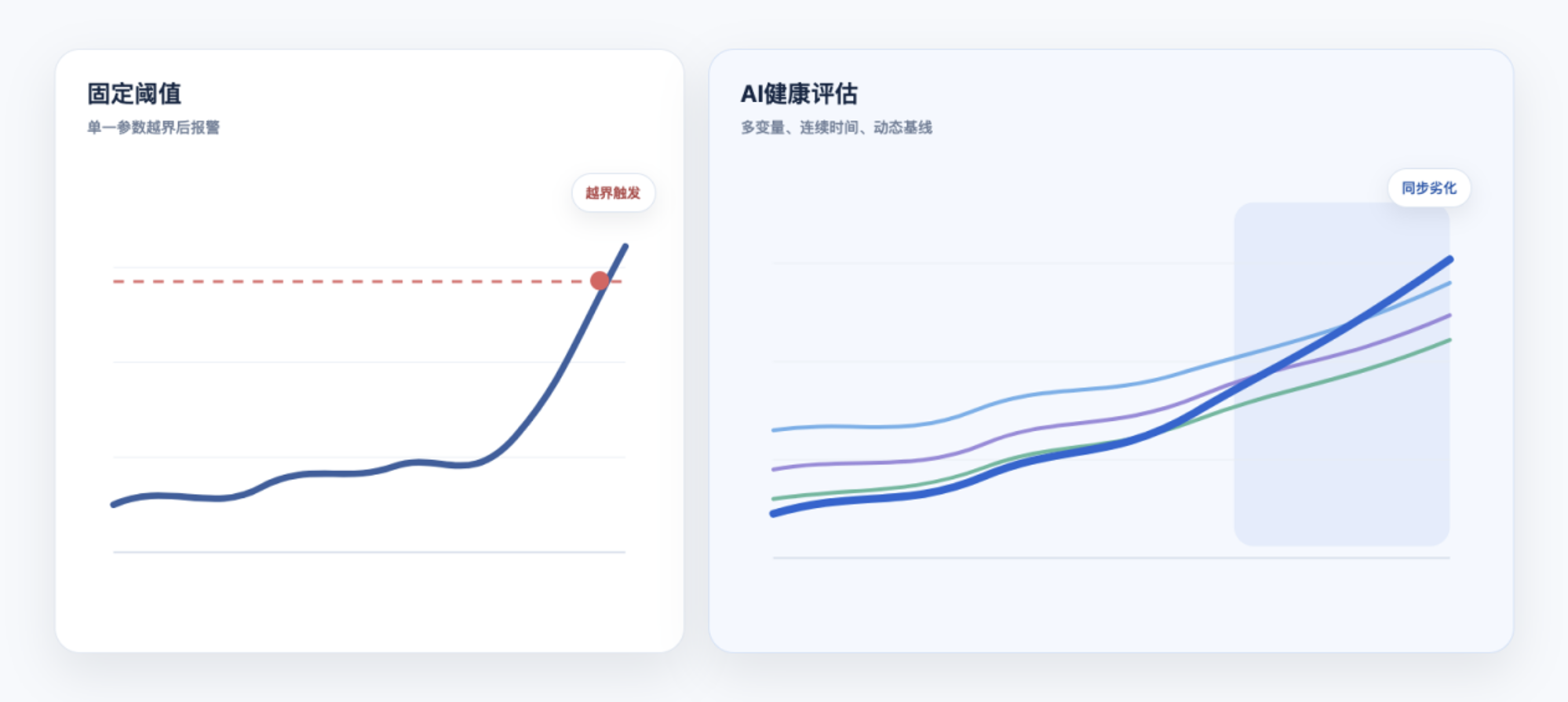
Figure 2 Fixed-Threshold Alarm vs. Multivariate Health Assessment
After detecting changes in advance, it is also necessary to determine where the risk originates.
AI further combines historical data and equipment mechanisms to trace the abnormal propagation path and identify the key anomalous parameters. For equipment engineers, the monitoring object expands from individual parameters to overall equipment status, making slowly accumulating risks easier to identify in advance and reducing troubleshooting time by more than 70%.

Detecting risks in advance only addresses 'when a problem may occur.' Equipment management must also answer how much remaining useful life there is, whether to repair, replace, or continue running, and how to schedule maintenance around production tasks.
Centered on equipment status, risk evolution, and maintenance execution, Gekte Chuangdongzhi has built a cluster of equipment agents that integrates AI capabilities throughout the predictive maintenance process. Built-in agents include equipment health assessment, predictive maintenance, maintenance strategy recommendation, and execution optimization. The equipment health assessment agent scores the current health status of equipment based on operating data. The predictive maintenance agent analyzes degradation trends, remaining useful life, and maintenance timing. The maintenance strategy recommendation agent compares repair, replace, and defer options based on equipment status. The execution optimization agent optimizes scheduling by incorporating production plans, personnel, and spare-part constraints. Through multi-agent collaboration, equipment management moves toward a data-driven proactive maintenance model.
In semiconductor CIM equipment management scenarios, this solution supports integration with FDC and PMS, linking equipment management stages such as anomaly capture, trend prediction, strategy recommendation, and execution optimization. This extends equipment management from problem detection to maintenance scheduling, further improving maintenance response and resource coordination efficiency.
Currently, this solution has been deployed at a leading panel manufacturer and a leading semiconductor silicon wafer manufacturer. Through real-time equipment data collection, AI analysis, and intelligent decision support, it promotes the implementation of equipment health management and predictive maintenance.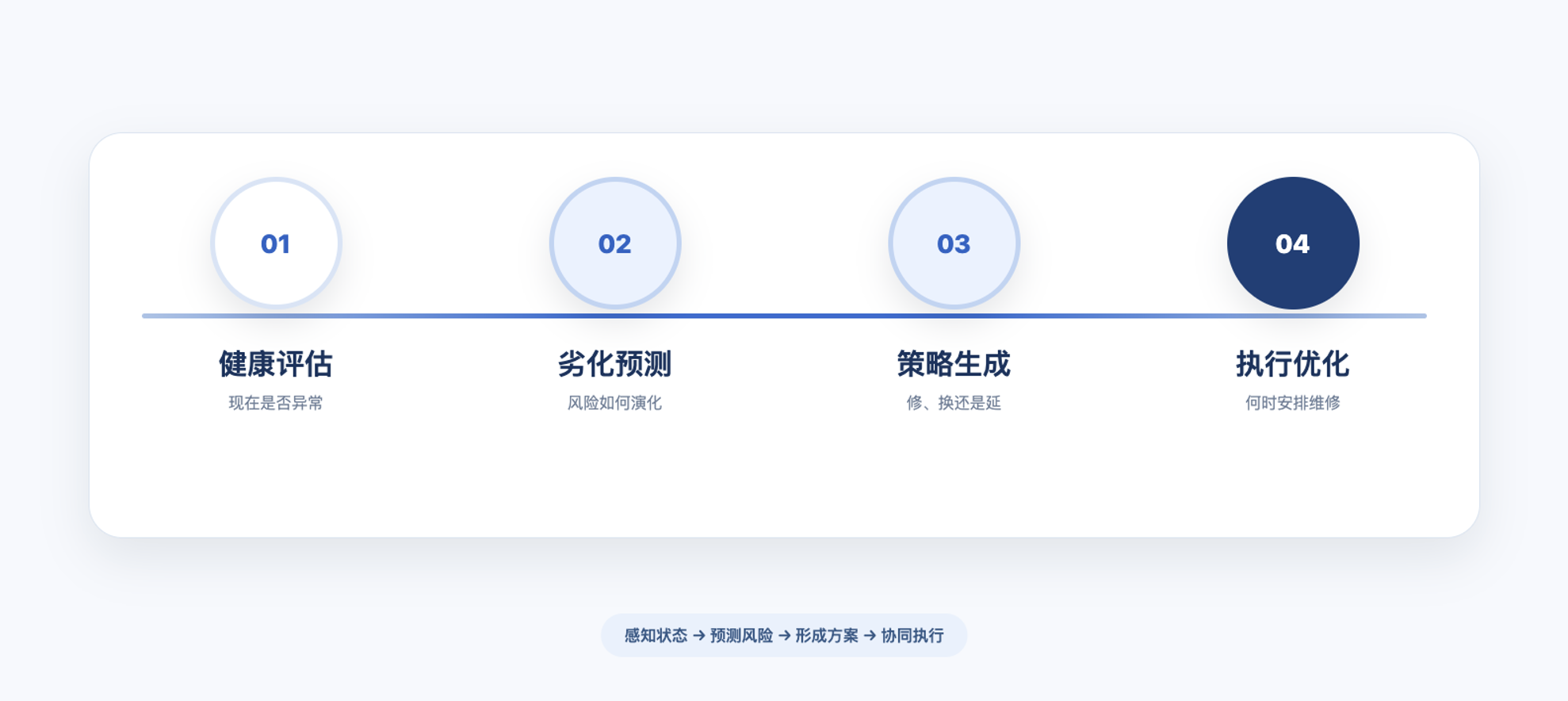
Figure 3 From Health Assessment to Execution Optimization
AI Finds Knowledge and Brings Maintenance Information to the Fault Site
Equipment fault handling relies heavily on engineer experience. When facing abnormal alarms, engineers typically need to look up abnormal reports, equipment history, maintenance records, operation manuals, and SOPs, then use their own experience to determine the appropriate action.
However, as equipment numbers increase and manufacturing processes become more complex, equipment knowledge becomes increasingly fragmented. It is difficult for new employees to quickly master experience, and the knowledge accumulated by senior engineers is hard to reuse at scale.
To address this issue, Gekte Chuangdongzhi, drawing on service experience with 30,000 advanced manufacturing customers and industry knowledge and project experience from more than 300 industry benchmark cases, combines general model capabilities with equipment scenarios to provide more targeted support for knowledge retrieval and fault handling. The equipment maintenance knowledge agent developed by Gekte Chuangdongzhi builds intelligent Q&A and search capabilities for equipment knowledge based on abnormal reports, abnormal records, equipment maintenance histories, and operation manuals.
Engineers can activate the equipment maintenance knowledge agent to search relevant materials based on alarms, fault types, SOPs, or other information. Equipment knowledge thus shifts from scattered documents to a unified query entry point. AI brings distributed equipment knowledge to the fault site, shortening the search path from alarm information to handling evidence.
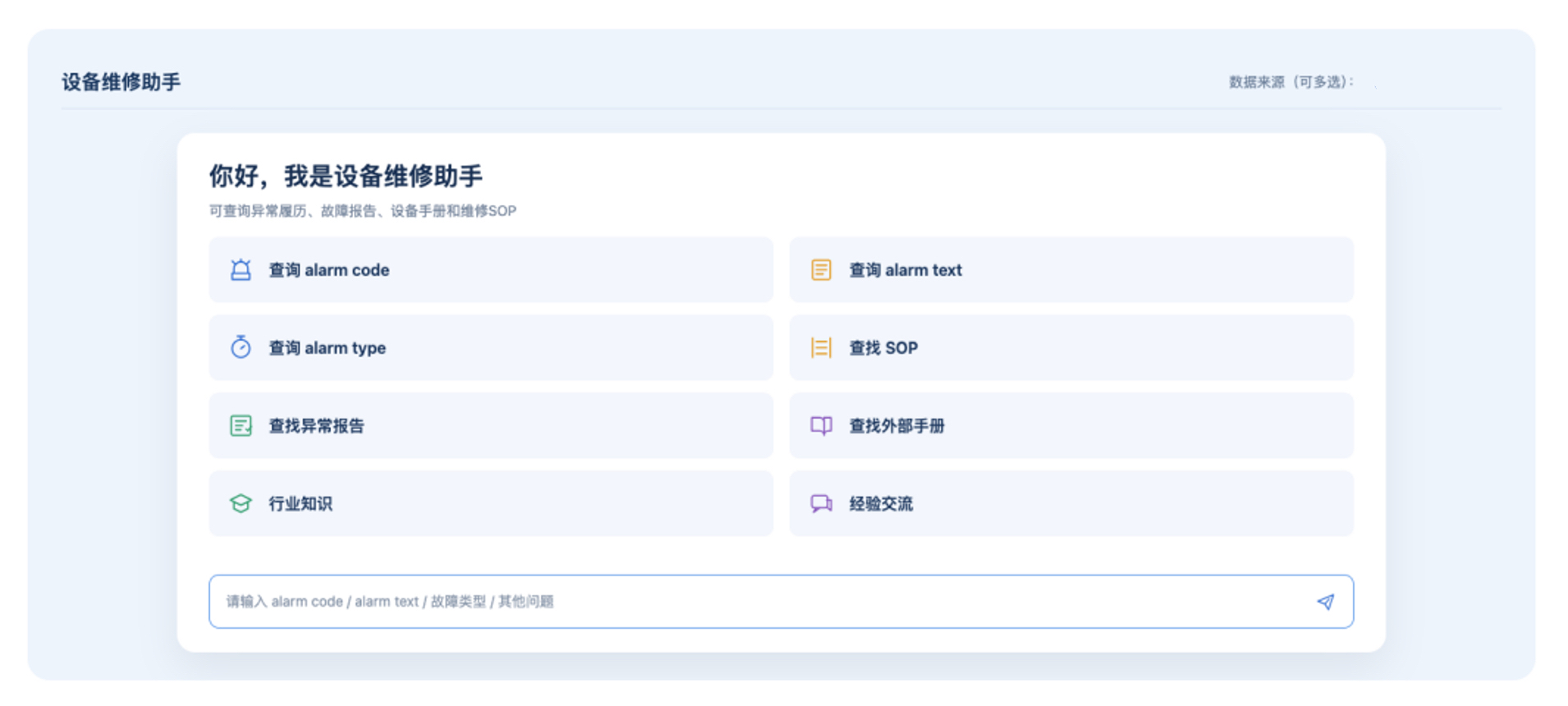
Figure 4 Product interface of the equipment maintenance knowledge assistant
From One Alarm to a Maintenance Decision
After AI enters equipment management, the changes can be summarized in three aspects: monitoring moves from a single threshold to equipment health assessment; maintenance moves from post-fault repair to degradation trend prediction; maintenance information moves from scattered searching to intelligent Q&A.
On this basis, Gekte Chuangdongzhi integrates equipment health assessment, trend prediction, maintenance strategy recommendation, and maintenance knowledge into a unified equipment management system, enabling them to be continuously linked around the same equipment issue. Analysis, judgment, and execution after an alarm form a complete chain, reducing average fault diagnosis and decision time from the 'hour level' to the 'minute level.'
From real manufacturing scenarios, the Gekte Chuangdongzhi AI Equipment Intelligence solution has already been applied in leading semiconductor manufacturers and continues to drive upgrades in equipment management models.
In the future, as industrial AI goes deeper into the production floor, the intelligent equipment operation model will evolve toward earlier risk identification, evidence-based maintenance decisions, and continuous accumulation of on-site experience, achieving a shift from problem detection to autonomous governance. The Gekte Chuangdongzhi AI Equipment Intelligence solution enables equipment to understand itself better and makes manufacturing more deterministic.